
Only Footnotes
The humility and richness of the brief aside

My twitter handle has been ‘@onlyfootnotes’ since I rejoined in 2021.
Why did I pick that? Truthfully, I cannot remember the exact reason. Rather, there was a gestalt of swirling associations with the phrase, and some have seemed like the real reasons over time.
The first and most straight forward is an idea echoed by Macbeth1:
Tomorrow, and tomorrow, and tomorrow
Creeps in this petty pace from day to day
To the last syllable of recorded time;
And all our yesterdays have lighted fools
The way to dusty death. Out, out, brief candle,
Life’s but a walking shadow, a poor player
That struts and frets his hour upon the stage
And then is heard no more. It is a tale
Told by an idiot, full of sound and fury
Signifying nothing.
It’s the idea that all of our writing, and indeed our lives, will at best turn to footnotes in grander or more timely narratives. In this way, it’s a slightly more personal version of “memento mori”, a reminder to myself to not be too self-important or consumed by the day to day drama of everyday life.
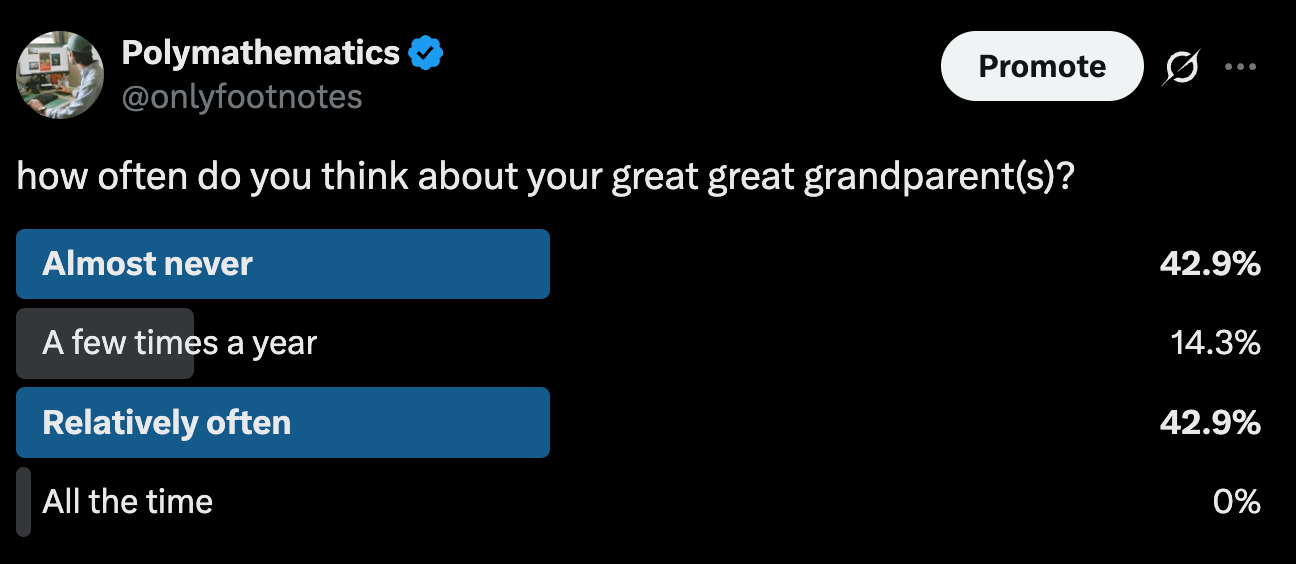
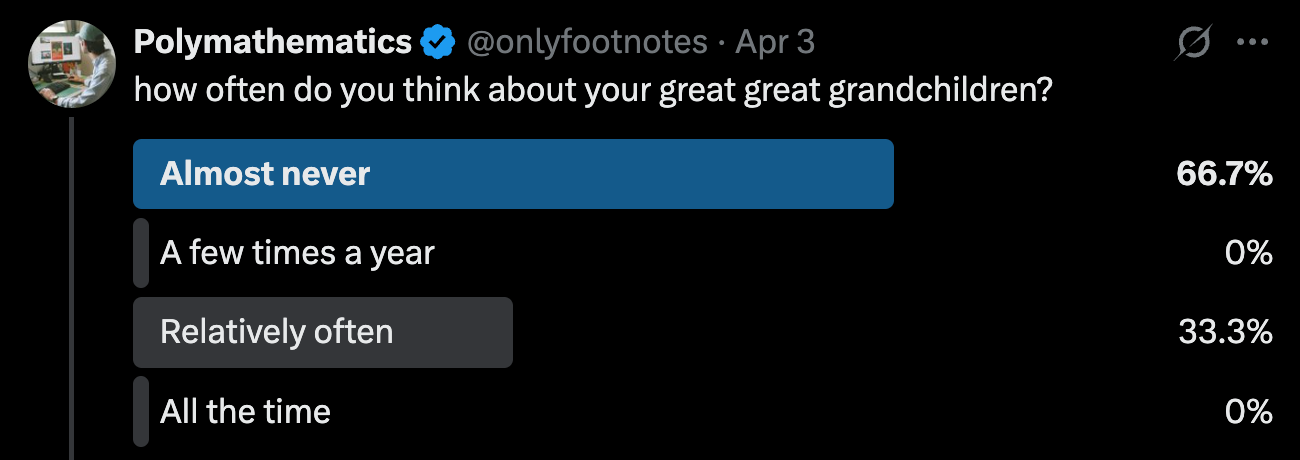
The second idea is almost the opposite to the first, a reminder to exalt the footnotes. It’s actually an elevation of footnotes. The footnotes and side trails are often the most interesting. Just as the side conversations, detours, and under explored areas in life can be the most interesting too. Some footnotes are conversational and simple asides which did not fit into the main text naturally, but others are the core ideas that informed the main piece or open the aperture of how a work was created2, letting you peek into the office of the writer. They are escape pods out of a restricted format, standardized phrasing, and the facade of the objective creator into the real world of connected ideas, natural language, and often humor3. So from this angle, the phrase means only the footnotes really matter.
Footnotes are often where the formal voice yields to the conversational and authentic voice of the writer. It’s where unadorned genuine interest takes over. This is the same reason I love parentheticals, what is meant to be an optional half-related idea can often turn out to be a portal to new rich ideas. Footnotes and parentheticals often represent a conversation the writer, or text, is having with themselves. I like that meta bend.
Finally, footnotes feel appropriate for the internet era and twitter, as they are sort of the predecessors to the hyperlink4 and the self-aware vanity of the internet driven media environment we now find ourselves in. Everything is commentary on commentary, threads and replies to replies, context about context, and self-referential.
Ultimately, what we expect to be our most important work often isn’t. And what we consider small and unremarkable footnotes to our own lives or work might turn out to be the most interesting parts.
So, it’s only footnotes. Or, if you like, it’s only footnotes.
This was top of mind because I was recently shown a Facebook memory where I posted this passage during my Sophomore year of High School. I realized it inspired the names of at least three meaningful works of art: Gabrielle Zevin’s novel, Faulkner’s Sound and Fury, and Mac Demarco’s “All of our Yesterdays”.
Funnily, this means they are also a kind of predecessor to behind the scenes or “making of” content.
James Joyce famously made clever use of them in Finnegan’s Wake, as have many others including, one of my favorites, Douglas Adams.